Archive for the ‘Global Health’ category

Gates and Clinton Urge Increased Investment in Global Health

March 10th, 2010

Today, former President Bill Clinton and Bill Gates appeared before the Senate Foreign Relations Committee to discuss the United States’ commitment to global health.   Recognized for their profound leadership in the field, each shared from personal experience the advances they have seen over the last 10 years in drug cost reductions, vaccine development, and treatment delivery and urged the Congress to continue funding these efforts.

They praised the work of previous administrations in targeting HIV/AIDS, malaria, and tuberculosis and applauded the new Global Health Initiative (GHI) announced by President Obama last year that would develop greater integration in the delivery of healthcare in developing countries—particularly for women and children.   President Clinton noted that infrastructure development will be a key component in moving the global health agenda forward, along with raising awareness among the American people of the important role global health plays in U.S. foreign policy.  Although, neglected tropical diseases were not mentioned specifically, they are listed as a target in GHI.

Overall, the hearing was positive step in demonstrating that bi-partisanship still does exist in a few spots on Capitol Hill and with the right amount of persuasion and energy global health interventions cannot only transform a community, but save lives.


Watch the hearing here

Reading List – 3/9/2010

March 9th, 2010

Hello everybody! Today we’re reading about GlaxoSmithKline upping its efforts to fight lymphatic filariasis, a new treatment for American soldiers who caught cutaneous leishmaniasis in Iraq, the latest release on the fight against LF in India, and, on a different note, a group of ultra-Orthodox rabbis declaring that lox should no longer be considered kosher due to a variant of roundworm found in fish.

In tough climate, GSK dedicates plant to fight elephantiasis, Rick Smith, Localtechwire

Heat therapy shown effective in treating cutaneous leishmaniasis among US soldiers in Iraq, PLoS Neglected Tropical Diseases

DMO allays fears over DEC tablets, The Hindu

Rabbis Claim Lox No Longer Kosher, Erica Butler, NBC New York

Equal Rights, Equal Opportunities

March 8th, 2010

Today, March 8, 2010 marks International Women’s Day, a day when women are recognized for their achievements without regard to divisions, whether national, ethnic, linguistic, cultural, economic or political. This years’ theme “Equal rights, Equal opportunities,” is a stark reminder of the unfinished agenda of giving women their rightful place at the table.  So as we reflect and commemorate this important day, we should take a critical look ahead at the opportunities that await future generations of women, opportunities to give women an equal voice and choice.

Interventions focused on neglected tropical disease (NTD) control and elimination could offer an opportunity for improving the health and rights of girls and women in the poorest countries of world. In his paper, Empowering Women and Improving Female Reproductive Health through Control of Neglected Tropical Diseases , Dr. Peter Hotez explains the devastating effects that NTDs have on women and girls in developing countries, by impairing reproductive health, increasing the transmission of sexually transmitted infections and promoting stigma and gender inequality.

The suffering that women and girls infected with NTDS is reflected best in the words of WHO Director-General who said “imagine the impact when a young woman with leprosy is told she can be fully cured, can marry, have children, and will not infect others. Just imagine the impact”  

So today, as we recognize the incredible women of the world who, despite all odds, have overcome  many obstacles to make it possible for us to celebrate this day, let us also use it as a call to action. We’re keeping our eyes locked on the future, when NTDs and other diseases that perpetuate gender inequality will be nothing but a thing of the past.

Reading List 3/8/2010

March 8th, 2010

Today, as we join in celebrating International Women’s Day, we’re reading the WHO’s comments on this day as well as reviewing a paper Dr. Peter Hotez wrote about womens health and NTDs. We’re also reading a profile of river blindness and about Buruli ulcer, one of the less discussed NTDs.

Equal rights, equal opportunities: progress for all, World Health Organization

WHO laments “shameful” lack of respect for women’s right to good health, World Health Organization

Empowering Women and Improving Female Reproductive Health through Control of Neglected Tropical Diseases, Peter Hotez, PLoS Neglected Tropical Diseases

Blind to the river and its hazards, Stanley M. Aronson, The Providence Journal

Buruli ulcer: an overlooked tropical disease, Robert Herriman, Examiner.com

Global Network Joins Call to Fully Fund International Affairs Budget

March 5th, 2010

When the Obama Administration released its FY 2011 budget, it included $58.5 billion for International Affairs. This includes $8.8 billion allocated for global health issues. However, the United States’  struggling economy, record budget deficit, and huge debts has led to mounting political pressure to cut spending, including, unfortunately, the International Affairs account which supports global health initiatives and  a number of development programs that life people out of poverty and promote stability worldwide

Fortunately, the community is united! We’ve joined with a coalition of other non-profits, NGOs, faith-based organizations, and others to send a letter to members of the US House of Representatives and Senate, emphasizing the importance of the International Affairs budget in U.S. foreign policy. The full text of the letter is below.

If you’re interested in joining the dialogue, call your congressman to tell them you support U.S. foreign assistance.

Dear Member of Congress:

We the undersigned organizations support the president’s request of $58.5b, as the minimum amount needed for the International Affairs account for FY11. This amount is expected to be 1.4% of total outlays of federal spending in FY11.

Our support is based on factors as varied as our specific missions themselves. But we are united around a common belief that the budget for International Affairs is critical to U.S. foreign policy and our shared future with people and nations around the world.

Sincerely,

  1. Academy for Educational Development
  2. Action Against Hunger
  3. African Diaspora for Change
  4. Aid to Artisans
  5. American Red Cross International Services
  6. American Refugee Committee
  7. Better World Campaign
  8. Bread for the World
  9. CARE
  10. Church World Service
  11. Concern America
  12. Congressional Hunger Center
  13. Disciples Justice Action Network (Disciples of Christ)
  14. Episcopal Relief & Development
  15. FACE AIDS
  16. Friends Committee on National Legislation
  17. Friends of the Global Fight
  18. Friends of the World Food Program
  19. Global Campaign for Education
  20. Global Health Council
  21. Global Network for Neglected Tropical Diseases, Sabin Vaccine Institute
  22. Helen Keller International
  23. INMED Partnerships for Children
  24. InterAction
  25. International Association of Black Professionals in International Affairs
  26. International Center for Research on Women
  27. International Relief and Development
  28. Joint Aid Management
  29. Lutheran World Relief
  30. Malaria No More
  31. Management Sciences for Health
  32. Mercy Corps
  33. Modernizing Foreign Assistance Network
  34. Mothers Acting Up
  35. National Association for the Advancement of Colored People
  36. National Education Association
  37. National Association of Evangelicals
  38. National Peace Corps Association
  39. New Evangelical Partnership for the Common Good
  40. NuVsionPAC
  41. ONE
  42. Outreach Internationa
  43. Oxfam America
  44. Pact
  45. Pathfinder International
  46. Physicians for Human Rights
  47. Plan USA
  48. Plant With Purpose
  49. Population Action International
  50. PSI (Population Services International)
  51. Presbyterian Church (U.S.A.), Washington Office
  52. RESULTS
  53. Save the Children
  54. Sierra Club
  55. Trickle Up
  56. United Methodist Church, General Board of Church and Society
  57. United Church of Christ, Justice and Witness Ministries
  58. US Fund for UNICEF
  59. White Ribbon Alliance
  60. Women Thrive Worldwide
  61. World Vision
  62. World Wildlife Fund

Just 50 Cents Campus Challenge Update!

March 4th, 2010

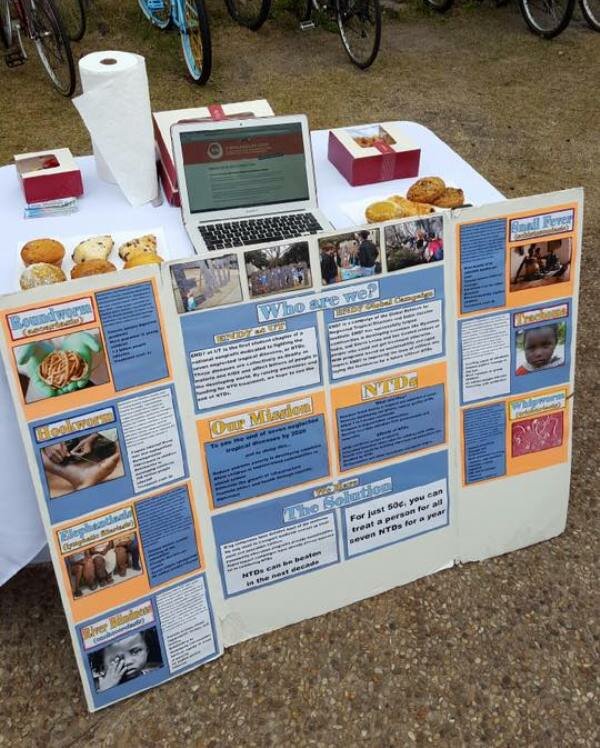
With only four weeks left to go in the first-ever Just 50 Cents Campus Challenge, our Student Ambassadors are finishing strong! Raising awareness and funds to fight diseases most people are unfamiliar with is no easy task, but advocates from across the globe have taken on the challenge with creativity, perseverance, and passion.  Students at GWU Medical School are hosting lectures, happy hours, and bake sales; students at London School of Economics/ HPPF created a rap video and are running the Paris half-marathon this weekend; students at Boston University are hosting an NTD symposium; and students at Warwick Medical School are running the Coventry Half-Marathon later this spring.   As we enter the final stretch, the following campaigns lead in fundraising efforts:

$1631.00 LSE/ HPPF

$1191.00 GWU SPHHS (Manuel Claros)

$956.00 GWU School of Medicine

$630.00 University of Minnesota

$467.00 Harvard University (Sarah Sorcher)

Our students are an inspiration to the whole Global Network team. Keep up the great work! We’ll see you at the finish.


River Blindness Transmission Cycle Broken in Ecuador

March 4th, 2010

Just this week the Ministry of Health and several other partners in the Onchocerciasis Elimination Program for the Americas (OEPA) have declared onchocerciasis transmission has been halted in Ecuador. As per World Health Organization policy, Ecuador must now monitor and verify elimination for the next three years. In 2008, the Pan American Health Organization restated its dedication to eliminating river blindness in the Americas by 2012 and this announcement is an important step towards achieving that goal.

Onchocerciasis is transmitted by the bite of the black fly and a small, bite-transmitted worm parasite. This parasite, Onchocerca volvulus, causes skin irritation and can cause loss of sight. The illness is known as river blindness because the black flies breed in fast-moving bodies of water near affected communities. In order to break the disease transmission cycle, implementing organizations utilize the common practice of mass drug administration (MDA). In MDA programs, safe and affordable (often donated) drugs are distributed to entire communities several times a year. For onchocerciasis treatments, the Merck produced drug Mecitzan (ivermectan) is used at no cost. In the last twenty years over eight million doses have been distributed across the region in endemic communities.

OEPA is a regional collaboration that was started in 1993 by The Carter Center to treat the more than 500,000 people at risk for this disease across Latin America. The partnership includes the Pan American Health Organization (World Health Organization), the pharmaceutical company Merck, the Pan American Health and Education Foundation (PAHEF), Lions Clubs International Foundation, and the Bill and Melinda Gates Foundation. The OEPA program targets the six Latin American countries (Brazil, Ecuador, Guatemala, Mexico and Venezuela) where onchocerciasis is still a public health threat. Originally there were seven countries on this list, but Colombia achieved transmission interruption in 2008. In light of this week’s announcement, this list will be shortened to only five countries.

With a growing interest in the potential for elimination of onchocerciasis from Africa, the success of the programs in the Americas provides an experience base that can guide the next phase of the onchocerciasis program in Africa.

See Also: 

http://www.pahef.org/press/2010_river_blindness.html

http://www.aolnews.com/health/article/ecuador-halts-spread-of-river-blindness/19378514

http://www.cartercenter.org/news/pr/ecuador-030110.html

Studies Uncover Potential New Roundworm Treatment

March 2nd, 2010

Amongst all the parasitic NTDs, roundworm (Ascariasis) stands out in particular, primarily for how widespread it is. An estimated over 800 million people worldwide, about one-eighth the world’s population, are infected with roundworm, 200 million more than whipworm, the next most widespread NTD. On top of that, the people most at risk for contracting roundworm are children ages 3 to 5. Considering that roundworm causes malnutrition, anemia, and physical and mental underdevelopment in children, the burden of this parasite becomes painfully clear. There is a treatment for roundworm, albendazole, but the worm is beginning to show signs of resistance to it. Fortunately, a new paper published today indicates a possible new cure for roundworm.

This new cure is based off of crystal proteins created by the soil bacterium Bacillus thuringiensis (Bt). Bt has been used in agriculture for decades to kill insects and certain crops have been genetically modified with Bt to eliminate the need to use insecticide. However, their use as a medicine had gone largely untested, until couple of new studies show great promise that Bt could be an effective way to treat roundworm in humans.

The paper released today documents an experiment where mice were infected with roundworm and allowed to mature before the mice were treated with Bt. The effect was dramatic. Within just a few days there was a 98% decrease in parasite eggs in the mice’s feces and a 70% decrease in intestinal parasites.  This comes on the heels of a previous test where hamsters were infected with roundworm and treated with Bt. In that test the hamsters saw a 90% decrease in roundworm.

The most noteworthy quote came from Dr. Raffi Aroian from UC San Diego, the author of this paper. “Compared to the best drugs people have developed to treat human parasitic worms,” Dr Aroian said, “this natural protein is at least three times better.” Dr. Aroian also explained that since Bt is already grown in large quantities that currently treating one individual with Bt would cost 28 cents, a cost that would certainly go down with future optimization and development.

Just last week we highlighted a paper discussing the innovation gap that exists in the NTD field. Today’s paper shows that there are dedicated professionals currently working hard to bridge that gap.

Reading List 3/2/10

March 2nd, 2010

Here’s what we’re reading today:

Trachoma casts shadow over Aboriginal communities, Australian Broadcast Corporation

Chagas disease surveillance focuses on palms, undercover bugs, Beth King, Smithsonian Tropical Research Institute

ADRA and Guyanese Government Partner to Combat Parasitic Diseases, Nadia McGill, Reuters

Vote for Neglected Tropical Diseases!

March 2nd, 2010

The Global Network is a finalist in Kiwanis International’s quest for their next World Service Project. If Neglected Tropical Diseases (NTDs) are chosen, this could make a HUGE impact in the control and elimination of diseases that affect 1.4 billion people worldwide!

 The Global Network’s Proposal is to ensure that more than 1 billion children born between 2003 and 2020 journey into adulthood as the first generation to grow and thrive without the burden of NTDs.Ending the neglected of these diseases will help bring prosperity to local economies, increase access to education, reduce poverty and most importantly, build sustainable development.


Please join the discussion and vote for Neglected Tropical Diseases!

http://sites.kiwanis.org/Kiwanis/en/worldwide-service-project/wsp-idd/joindiscussion.aspx