Archive for the ‘Obama Administration’ category

Peace through Vaccine Diplomacy

March 11th, 2010

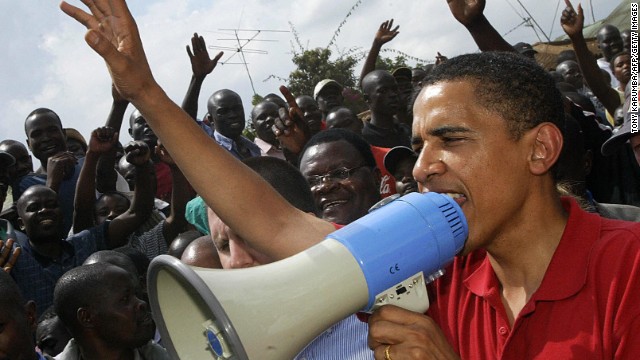
Later this month President Obama is leaving on a trip to Indonesia, marking a major diplomatic trip to the most populous Muslim nation in the world. In order to improve US relations with the Muslim world there are many diplomatic tools available. One of those, according to a new editorial in Science Magazine by Dr. Peter Hotez, is vaccine diplomacy.

Vaccine diplomacy is forging tighter bonds between nations by uniting against a common foe: disease. Citing the little known collaboration between American and Russian scientists, including Dr. Albert B. Sabin, during the Cold War that resulted in the creation of the oral polio vaccine, Hotez states that similar scientific collaborations between the United States and Islamic nations—where up to one-half of the world’s neglected tropical diseases (NTDs) occur—could lead to great scientific and societal achievements.

The longer term benefit of this vaccine diplomacy would come from eliminating the burden of disease. Muslim nations worldwide suffer greatly from the burden of NTDs, perpetuating poverty and creating instability, internally and internationally. By helping to enrich and stabilize Muslim nations, vaccine diplomacy could go a long way to helping America improve its international standing.

Access the full Science editorial here or listen to the podcast interview with Dr. Hotez here.

Gates and Clinton Urge Increased Investment in Global Health

March 10th, 2010

Today, former President Bill Clinton and Bill Gates appeared before the Senate Foreign Relations Committee to discuss the United States’ commitment to global health.   Recognized for their profound leadership in the field, each shared from personal experience the advances they have seen over the last 10 years in drug cost reductions, vaccine development, and treatment delivery and urged the Congress to continue funding these efforts.

They praised the work of previous administrations in targeting HIV/AIDS, malaria, and tuberculosis and applauded the new Global Health Initiative (GHI) announced by President Obama last year that would develop greater integration in the delivery of healthcare in developing countries—particularly for women and children.   President Clinton noted that infrastructure development will be a key component in moving the global health agenda forward, along with raising awareness among the American people of the important role global health plays in U.S. foreign policy.  Although, neglected tropical diseases were not mentioned specifically, they are listed as a target in GHI.

Overall, the hearing was positive step in demonstrating that bi-partisanship still does exist in a few spots on Capitol Hill and with the right amount of persuasion and energy global health interventions cannot only transform a community, but save lives.


Watch the hearing here

Equal Rights, Equal Opportunities

March 8th, 2010

Today, March 8, 2010 marks International Women’s Day, a day when women are recognized for their achievements without regard to divisions, whether national, ethnic, linguistic, cultural, economic or political. This years’ theme “Equal rights, Equal opportunities,” is a stark reminder of the unfinished agenda of giving women their rightful place at the table.  So as we reflect and commemorate this important day, we should take a critical look ahead at the opportunities that await future generations of women, opportunities to give women an equal voice and choice.

Interventions focused on neglected tropical disease (NTD) control and elimination could offer an opportunity for improving the health and rights of girls and women in the poorest countries of world. In his paper, Empowering Women and Improving Female Reproductive Health through Control of Neglected Tropical Diseases , Dr. Peter Hotez explains the devastating effects that NTDs have on women and girls in developing countries, by impairing reproductive health, increasing the transmission of sexually transmitted infections and promoting stigma and gender inequality.

The suffering that women and girls infected with NTDS is reflected best in the words of WHO Director-General who said “imagine the impact when a young woman with leprosy is told she can be fully cured, can marry, have children, and will not infect others. Just imagine the impact”  

So today, as we recognize the incredible women of the world who, despite all odds, have overcome  many obstacles to make it possible for us to celebrate this day, let us also use it as a call to action. We’re keeping our eyes locked on the future, when NTDs and other diseases that perpetuate gender inequality will be nothing but a thing of the past.

Global Network Joins Call to Fully Fund International Affairs Budget

March 5th, 2010

When the Obama Administration released its FY 2011 budget, it included $58.5 billion for International Affairs. This includes $8.8 billion allocated for global health issues. However, the United States’  struggling economy, record budget deficit, and huge debts has led to mounting political pressure to cut spending, including, unfortunately, the International Affairs account which supports global health initiatives and  a number of development programs that life people out of poverty and promote stability worldwide

Fortunately, the community is united! We’ve joined with a coalition of other non-profits, NGOs, faith-based organizations, and others to send a letter to members of the US House of Representatives and Senate, emphasizing the importance of the International Affairs budget in U.S. foreign policy. The full text of the letter is below.

If you’re interested in joining the dialogue, call your congressman to tell them you support U.S. foreign assistance.

Dear Member of Congress:

We the undersigned organizations support the president’s request of $58.5b, as the minimum amount needed for the International Affairs account for FY11. This amount is expected to be 1.4% of total outlays of federal spending in FY11.

Our support is based on factors as varied as our specific missions themselves. But we are united around a common belief that the budget for International Affairs is critical to U.S. foreign policy and our shared future with people and nations around the world.

Sincerely,

  1. Academy for Educational Development
  2. Action Against Hunger
  3. African Diaspora for Change
  4. Aid to Artisans
  5. American Red Cross International Services
  6. American Refugee Committee
  7. Better World Campaign
  8. Bread for the World
  9. CARE
  10. Church World Service
  11. Concern America
  12. Congressional Hunger Center
  13. Disciples Justice Action Network (Disciples of Christ)
  14. Episcopal Relief & Development
  15. FACE AIDS
  16. Friends Committee on National Legislation
  17. Friends of the Global Fight
  18. Friends of the World Food Program
  19. Global Campaign for Education
  20. Global Health Council
  21. Global Network for Neglected Tropical Diseases, Sabin Vaccine Institute
  22. Helen Keller International
  23. INMED Partnerships for Children
  24. InterAction
  25. International Association of Black Professionals in International Affairs
  26. International Center for Research on Women
  27. International Relief and Development
  28. Joint Aid Management
  29. Lutheran World Relief
  30. Malaria No More
  31. Management Sciences for Health
  32. Mercy Corps
  33. Modernizing Foreign Assistance Network
  34. Mothers Acting Up
  35. National Association for the Advancement of Colored People
  36. National Education Association
  37. National Association of Evangelicals
  38. National Peace Corps Association
  39. New Evangelical Partnership for the Common Good
  40. NuVsionPAC
  41. ONE
  42. Outreach Internationa
  43. Oxfam America
  44. Pact
  45. Pathfinder International
  46. Physicians for Human Rights
  47. Plan USA
  48. Plant With Purpose
  49. Population Action International
  50. PSI (Population Services International)
  51. Presbyterian Church (U.S.A.), Washington Office
  52. RESULTS
  53. Save the Children
  54. Sierra Club
  55. Trickle Up
  56. United Methodist Church, General Board of Church and Society
  57. United Church of Christ, Justice and Witness Ministries
  58. US Fund for UNICEF
  59. White Ribbon Alliance
  60. Women Thrive Worldwide
  61. World Vision
  62. World Wildlife Fund

Obama Administration Appoints New USAID Leader for Global Health Initiative

February 25th, 2010

Yesterday the Obama Administration took another step towards implementing its Global Health Initiative by appointing Amie Batson to lead USAID’s efforts for the GHI.  She will also serve as deputy assistant administrator for USAID.

 Ms. Batson comes to USAID after an illustrious 20 year career in the health field. She has held various positions at WHO, UNICEF, and most recently the World Bank. She was one of the founding members of the Global Alliance for Vaccines & Immunization, a major global partnership advancing the cause of immunization worldwide. Her efforts and innovative thinking, especially in the fields of financing, have helped provide medical services to millions of people worldwide. She received the President’s Award for Excellence in Innovation from the World Bank in 2002.

 Read more about USAID’s announcement of Ms. Batson’s appointment here.

Reading List 2/25/10

February 25th, 2010

Today we’re reading about reactions by Doctors Without Borders to the NTD aspects of the Obama Administration’s Global Health Initiative, an article about the difficulties registering new drugs in Africa to fight NTDs, and about an ongoing effort to combat lymphatic filariasis in southern India.

Fighting Deadly Neglected Tropical Diseases: Opportunities to Expand U.S. Impact in Control of NTDs, Doctors Without Borders

White House Called on to Expand Global Health Initiative, Doctors Without Borders

Registering New Drugs: the African context, Paul Chinnock, TropIKA.net

Filariasis Medicines to be Distributed, The Hindu

Good Read: Ending the Neglect of Neglected Tropical Diseases

February 19th, 2010

Here is some worthwhile weekend reading! Perfect for lounging out and sipping a cup of tea at a local coffee shop!

 The Population Research Bureau (PRB) put out a policy brief called “Ending the Neglect of Neglected Tropical Diseases.” The paper gives a good introduction and breakdown of NTDs, its global impact and the cost-effective and efficient solutions available now to help tackle them.

Check it out here

Reading List 2/12/10

February 12th, 2010
DC Streets Covered in a Blanket of Snow

As we dig ourselves out and are settling back into the office after unprecedented amount of snow hit Washington DC this past week, here is what we’ve been reading.

  1. Former U.S. President Jimmy Carter Visits Last Stronghold of Guinea Worm Disease in Southern Sudan, Emily Staub, ModernGhana.com
  2. Drug shows promise against river blindness, Yahoo! News
  3. What Haiti needs most, Richard Santos, Baltimore Sun
  4. Hong Kong Says Skip Worm Diet, Scott Hensley, NPR Blog
  5. Uganda: Swelling Feet Bring Pain, Fear to Ibanda Village, Jennina Aryampwera, allAfrica.com
  6. Halving world poverty by 2015 unlikely: UN, AFP
  7. Aid groups fear Haitian relief diverts funds from other needs, Mary Beth Sheridan, Washington Post

New Scientific Paper Examines the Lack of Scientific Interest in Neglected Tropical Diseases

February 3rd, 2010

As part of the global health community, we are always working to raise the profile of the neglected tropical diseases. 

A paper  released in the January 26th, 2010 edition of the online peer-reviewed scientific journal PLoS Neglected Tropical Diseases, looks at the lack of research and attention given to the NTDs.  Author Dieter Vanderelst,an economist at the University of Antwerp, argues that scientific research into the NTDs lags behind other diseases which have a similar burden around the world. Not only does this disparity exist, but it is likely underestimated.

The researchers write that, “The disproportionally low research interest in NTDs is doubly worrying if one considers that the DALYs associated with NTDs are generally assumed to be underestimated.” DALYs are a public health measurement that takes into account the years of life a person loses due to either illness or death from a specific disease. Although there has been measurable growth in the body of research around the NTDs, this has been largely attributed to the creation of the NTD specific PloS journal.

Similarly, resources for NTDs are growing due to the increased interest in global health and now many new partners are working on cost effective and efficient solutions and interventions.  “It will be necessary for civil society, scientists, and policymakers alike to break this cycle so that some of the most common infections among the 2.7 billion people living on less than US$ 2 per day receive the attention they deserve.” Although progress is being made, there is still a lot of work to be done.

With the release of President Obama’s proposed FY11 budget allocating $155 million towards NTD control and elimination efforts it seems as if the Administration is making NTDs a significant priority. In particular, the Administration is seeking to reduce the prevalence of NTDs globally by 50% within 70% of all of the affected population, eliminate onchocerciasis in Latin America by 2016, eliminate lymphatic filariasis globally by 2017, and eliminate leprosy globally. With this new focus on NTDs, and the associated increase in resources, perhaps the research gap for NTDs will begin to close.

Reading List 2/3/10

February 3rd, 2010

Today we’re reading about the fallout from Monday’s unveiling of the fiscal year 2011 budget and various analysis of how it will impact the global health sector and NTDs in particular. We’re also reading about other miscellaneous developments in NTDs and global health.

  1. Obama’s FY 2011 budget gives global health funding boost, Kaiser Family Foundation
    An article breaking down global health spending in the fiscal year 2011 budget.
  2. Aid advocates happy, not thrilled with Obama’s new budget, Josh Rogin, Foreign Policy
  3. Obama’s Global Health Budget a Mixed Bag, Te-Ping Chen, Change.org
    Two different analysis of the global health aspect of the 2011 budget.
  4. Glaxo CEO: Time to diversify, help poor countries, Associated Press
    An interview with the CEO of GlaxoSmithKlein about what the company is doing to help address global health.
  5. Nigeria moves towards eradication of Guinea worm, Azoma Chikwe, Daily Sun
    After decades of work, Nigeria is on the cusp of becoming another deworming success story.
  6. UNICEF And Partners Kick Off Fifth Annual Global Immunization Meeting, Medical News Today
    UNICEF, the WHO, and the GAVI Alliance are meeting in Geneva to analyze and improve immunization efforts globally