Archive for the ‘Public Health’ category

The Fight Against Guinea Worm: In Pictures

March 12th, 2010

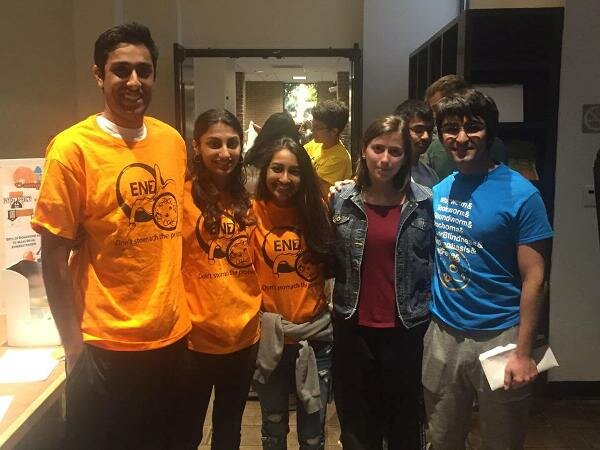
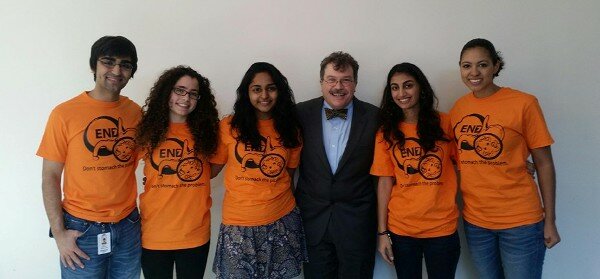
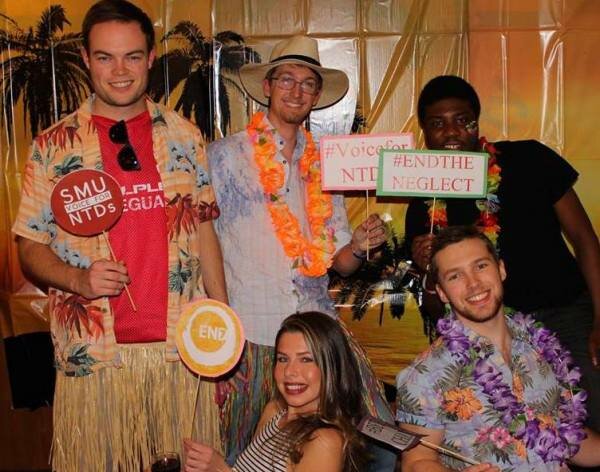
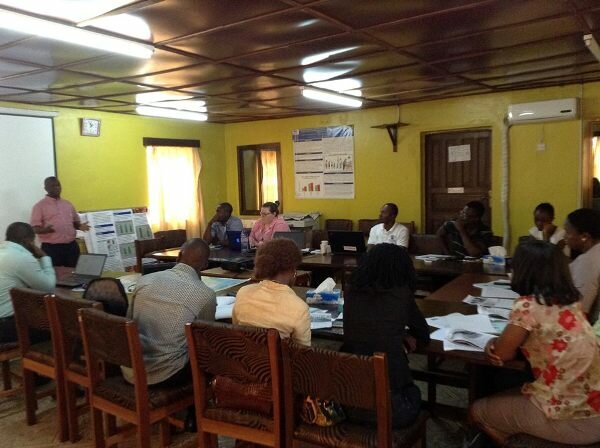
After decades of effort, Guinea worm is on the verge of joining smallpox as an eradicated disease. We want to draw your attention to a photo gallery put together by the Gates Foundation profiling this battle. These images, three of which are shown above, provide a face to the battle against Guinea worm. You can find these, and the rest, here.

Peace through Vaccine Diplomacy

March 11th, 2010

Later this month President Obama is leaving on a trip to Indonesia, marking a major diplomatic trip to the most populous Muslim nation in the world. In order to improve US relations with the Muslim world there are many diplomatic tools available. One of those, according to a new editorial in Science Magazine by Dr. Peter Hotez, is vaccine diplomacy.

Vaccine diplomacy is forging tighter bonds between nations by uniting against a common foe: disease. Citing the little known collaboration between American and Russian scientists, including Dr. Albert B. Sabin, during the Cold War that resulted in the creation of the oral polio vaccine, Hotez states that similar scientific collaborations between the United States and Islamic nations—where up to one-half of the world’s neglected tropical diseases (NTDs) occur—could lead to great scientific and societal achievements.

The longer term benefit of this vaccine diplomacy would come from eliminating the burden of disease. Muslim nations worldwide suffer greatly from the burden of NTDs, perpetuating poverty and creating instability, internally and internationally. By helping to enrich and stabilize Muslim nations, vaccine diplomacy could go a long way to helping America improve its international standing.

Access the full Science editorial here or listen to the podcast interview with Dr. Hotez here.

Gates and Clinton Urge Increased Investment in Global Health

March 10th, 2010

Today, former President Bill Clinton and Bill Gates appeared before the Senate Foreign Relations Committee to discuss the United States’ commitment to global health.   Recognized for their profound leadership in the field, each shared from personal experience the advances they have seen over the last 10 years in drug cost reductions, vaccine development, and treatment delivery and urged the Congress to continue funding these efforts.

They praised the work of previous administrations in targeting HIV/AIDS, malaria, and tuberculosis and applauded the new Global Health Initiative (GHI) announced by President Obama last year that would develop greater integration in the delivery of healthcare in developing countries—particularly for women and children.   President Clinton noted that infrastructure development will be a key component in moving the global health agenda forward, along with raising awareness among the American people of the important role global health plays in U.S. foreign policy.  Although, neglected tropical diseases were not mentioned specifically, they are listed as a target in GHI.

Overall, the hearing was positive step in demonstrating that bi-partisanship still does exist in a few spots on Capitol Hill and with the right amount of persuasion and energy global health interventions cannot only transform a community, but save lives.


Watch the hearing here

Equal Rights, Equal Opportunities

March 8th, 2010

Today, March 8, 2010 marks International Women’s Day, a day when women are recognized for their achievements without regard to divisions, whether national, ethnic, linguistic, cultural, economic or political. This years’ theme “Equal rights, Equal opportunities,” is a stark reminder of the unfinished agenda of giving women their rightful place at the table.  So as we reflect and commemorate this important day, we should take a critical look ahead at the opportunities that await future generations of women, opportunities to give women an equal voice and choice.

Interventions focused on neglected tropical disease (NTD) control and elimination could offer an opportunity for improving the health and rights of girls and women in the poorest countries of world. In his paper, Empowering Women and Improving Female Reproductive Health through Control of Neglected Tropical Diseases , Dr. Peter Hotez explains the devastating effects that NTDs have on women and girls in developing countries, by impairing reproductive health, increasing the transmission of sexually transmitted infections and promoting stigma and gender inequality.

The suffering that women and girls infected with NTDS is reflected best in the words of WHO Director-General who said “imagine the impact when a young woman with leprosy is told she can be fully cured, can marry, have children, and will not infect others. Just imagine the impact”  

So today, as we recognize the incredible women of the world who, despite all odds, have overcome  many obstacles to make it possible for us to celebrate this day, let us also use it as a call to action. We’re keeping our eyes locked on the future, when NTDs and other diseases that perpetuate gender inequality will be nothing but a thing of the past.

Reading List 3/8/2010

March 8th, 2010

Today, as we join in celebrating International Women’s Day, we’re reading the WHO’s comments on this day as well as reviewing a paper Dr. Peter Hotez wrote about womens health and NTDs. We’re also reading a profile of river blindness and about Buruli ulcer, one of the less discussed NTDs.

Equal rights, equal opportunities: progress for all, World Health Organization

WHO laments “shameful” lack of respect for women’s right to good health, World Health Organization

Empowering Women and Improving Female Reproductive Health through Control of Neglected Tropical Diseases, Peter Hotez, PLoS Neglected Tropical Diseases

Blind to the river and its hazards, Stanley M. Aronson, The Providence Journal

Buruli ulcer: an overlooked tropical disease, Robert Herriman, Examiner.com

River Blindness Transmission Cycle Broken in Ecuador

March 4th, 2010

Just this week the Ministry of Health and several other partners in the Onchocerciasis Elimination Program for the Americas (OEPA) have declared onchocerciasis transmission has been halted in Ecuador. As per World Health Organization policy, Ecuador must now monitor and verify elimination for the next three years. In 2008, the Pan American Health Organization restated its dedication to eliminating river blindness in the Americas by 2012 and this announcement is an important step towards achieving that goal.

Onchocerciasis is transmitted by the bite of the black fly and a small, bite-transmitted worm parasite. This parasite, Onchocerca volvulus, causes skin irritation and can cause loss of sight. The illness is known as river blindness because the black flies breed in fast-moving bodies of water near affected communities. In order to break the disease transmission cycle, implementing organizations utilize the common practice of mass drug administration (MDA). In MDA programs, safe and affordable (often donated) drugs are distributed to entire communities several times a year. For onchocerciasis treatments, the Merck produced drug Mecitzan (ivermectan) is used at no cost. In the last twenty years over eight million doses have been distributed across the region in endemic communities.

OEPA is a regional collaboration that was started in 1993 by The Carter Center to treat the more than 500,000 people at risk for this disease across Latin America. The partnership includes the Pan American Health Organization (World Health Organization), the pharmaceutical company Merck, the Pan American Health and Education Foundation (PAHEF), Lions Clubs International Foundation, and the Bill and Melinda Gates Foundation. The OEPA program targets the six Latin American countries (Brazil, Ecuador, Guatemala, Mexico and Venezuela) where onchocerciasis is still a public health threat. Originally there were seven countries on this list, but Colombia achieved transmission interruption in 2008. In light of this week’s announcement, this list will be shortened to only five countries.

With a growing interest in the potential for elimination of onchocerciasis from Africa, the success of the programs in the Americas provides an experience base that can guide the next phase of the onchocerciasis program in Africa.

See Also: 

http://www.pahef.org/press/2010_river_blindness.html

http://www.aolnews.com/health/article/ecuador-halts-spread-of-river-blindness/19378514

http://www.cartercenter.org/news/pr/ecuador-030110.html

Studies Uncover Potential New Roundworm Treatment

March 2nd, 2010

Amongst all the parasitic NTDs, roundworm (Ascariasis) stands out in particular, primarily for how widespread it is. An estimated over 800 million people worldwide, about one-eighth the world’s population, are infected with roundworm, 200 million more than whipworm, the next most widespread NTD. On top of that, the people most at risk for contracting roundworm are children ages 3 to 5. Considering that roundworm causes malnutrition, anemia, and physical and mental underdevelopment in children, the burden of this parasite becomes painfully clear. There is a treatment for roundworm, albendazole, but the worm is beginning to show signs of resistance to it. Fortunately, a new paper published today indicates a possible new cure for roundworm.

This new cure is based off of crystal proteins created by the soil bacterium Bacillus thuringiensis (Bt). Bt has been used in agriculture for decades to kill insects and certain crops have been genetically modified with Bt to eliminate the need to use insecticide. However, their use as a medicine had gone largely untested, until couple of new studies show great promise that Bt could be an effective way to treat roundworm in humans.

The paper released today documents an experiment where mice were infected with roundworm and allowed to mature before the mice were treated with Bt. The effect was dramatic. Within just a few days there was a 98% decrease in parasite eggs in the mice’s feces and a 70% decrease in intestinal parasites.  This comes on the heels of a previous test where hamsters were infected with roundworm and treated with Bt. In that test the hamsters saw a 90% decrease in roundworm.

The most noteworthy quote came from Dr. Raffi Aroian from UC San Diego, the author of this paper. “Compared to the best drugs people have developed to treat human parasitic worms,” Dr Aroian said, “this natural protein is at least three times better.” Dr. Aroian also explained that since Bt is already grown in large quantities that currently treating one individual with Bt would cost 28 cents, a cost that would certainly go down with future optimization and development.

Just last week we highlighted a paper discussing the innovation gap that exists in the NTD field. Today’s paper shows that there are dedicated professionals currently working hard to bridge that gap.

Sabin Vice-President Dr. Ciro de Quadros Receives Chesley Perry Award from Rotary International

February 26th, 2010


End Polio Now

Exciting News!

The Rotary Club of Chicago has presented Sabin Vice-President Dr. Ciro de Quadros with the Chesley Perry Award for Distinguished Humanitarian Service for global polio eradication.

Dr. de Quadros led the team responsible for developing a surveillance and response strategy to eliminate polio from the Americas. Based on the success of the polio eradication strategy, the World Health Organization (WHO) committed to the global eradication of polio.

Worldwide, polio has been eliminated in all but four countries: Afghanistan, India, Nigeria, and Pakistan. The Americas were declared free from polio in 1994, the Western Pacific region in 2000, and Europe in 2002.

“Ciro’s contributions to worldwide polio eradication efforts are immeasurable and he continues to be a defining advocate for polio eradication in the few places where the disease remains,” said Sabin President Dr. Peter Hotez. “All of us at Sabin congratulate Ciro on receiving this distinguished award. With the strong support of champions like Ciro, the eradication of polio can be achieved in the near future.”

End Polio Now2

The award presentation on February 23rd coincided with Rotary International’s 105th anniversary and a global call to “End Polio Now.” Landmarks around the world including, Chicago’s Wrigley Building; the Egyptian Pyramid of Khafre; Buenos Aires’ Obelisk; and the Taipei 101 building displayed an “End Polio Now” banner calling attention to the devastating effects of polio, a crippling disease that can be fatal and disproportionately affects children under the age of five.

In addition to Dr. de Quadros, notable figures in attendance for the award presentation and lighting ceremony included: Illinois Governor Pat Quinn; Chicago Mayor Richard M. Daley; the Reverend Jesse Jackson, President of the Rainbow PUSH Coalition; James Galloway, U.S. Assistant Surgeon General; and Ed Futa, General Secretary of Rotary International.

Obama Administration Appoints New USAID Leader for Global Health Initiative

February 25th, 2010

Yesterday the Obama Administration took another step towards implementing its Global Health Initiative by appointing Amie Batson to lead USAID’s efforts for the GHI.  She will also serve as deputy assistant administrator for USAID.

 Ms. Batson comes to USAID after an illustrious 20 year career in the health field. She has held various positions at WHO, UNICEF, and most recently the World Bank. She was one of the founding members of the Global Alliance for Vaccines & Immunization, a major global partnership advancing the cause of immunization worldwide. Her efforts and innovative thinking, especially in the fields of financing, have helped provide medical services to millions of people worldwide. She received the President’s Award for Excellence in Innovation from the World Bank in 2002.

 Read more about USAID’s announcement of Ms. Batson’s appointment here.

Reading List 2/25/10

February 25th, 2010

Today we’re reading about reactions by Doctors Without Borders to the NTD aspects of the Obama Administration’s Global Health Initiative, an article about the difficulties registering new drugs in Africa to fight NTDs, and about an ongoing effort to combat lymphatic filariasis in southern India.

Fighting Deadly Neglected Tropical Diseases: Opportunities to Expand U.S. Impact in Control of NTDs, Doctors Without Borders

White House Called on to Expand Global Health Initiative, Doctors Without Borders

Registering New Drugs: the African context, Paul Chinnock, TropIKA.net

Filariasis Medicines to be Distributed, The Hindu